I decided to do some exploration tonight of some Social Media sites that I am not as familiar with as I should be -- sites like tumblr, for example. An interesting thing about tumblr is that the site really promotes the fact that you can share everything you post super easily. You can email to your blog, you can blog to your tweets, you can tweet to your blogs, you can Facebook all of it...
I got a bit overwhelmed.
Then an idea came to me. Maybe it's because at heart I'll always be a reasonably old-fashioned minded marketing person. Maybe it's because I've been trying to untangle the skein of yarn that is Cloud Computing. Whatever the reason, the following question came to mind. "Why are we sharing everything out when we could be bringing people IN?"
Take Another Little Piece of My Content Now Baby
Currently, I am sending out content in the following ways, directly or indirectly:
Company Website/Company E-Newsletter/Professional Blog/Personal Blog/Facebook Account/Twitter Account/LinkedIn Account/BrainShark.com/3 Email Accounts
Compared to a lot of people, this list is short. Google Reader, Google Wave, Google Buzz, Tumblr, Digg, Delicious, multiple Twitter Accounts, YouTube, Podcasting -- the ways you can send information out are getting to seem almost infinite.
Then there's the sharing and cross-platform stuff that I haven't really engaged in much yet. My blog imports into LinkedIn. I had my Twitter account importing into LinkedIn for awhile till I realized it imported all of my @ responses. That was a bummer. There are people who can execute a single action, like "liking" a YouTube video, and have that action fed to 3-4 different accounts.
Let's Bring It In
So here is my dream. You log into your favorite browser, where a central hub is waiting for your input. This central hub has different groups that you can feed content to just by selecting them. If you are posting a professional blog that you want to send out to your LinkedIn network, your company database, and your Twitter account, you select those areas. If it's a personal photo of your kid riding an elephant at the zoo, you select your Facebook type friends.
On the other side of the dashboard, people could opt in to your communications, and you'd have to approve them for the different groups they'd want to be a part of. If they want to be part of your personal communications yet you don't know them, they get denied for that content, but maybe could still receive your professional stuff.
Maybe the control panel could also segment types of content. Professional photos go to this group and this group. Professional videos to the same groups. Personal photos just go here.
Web 4.0?
Instead of separate sites like Facebook, Twitter, and LinkedIn, I think the future of the web will be the technologies that those sites employ as available to everyone through a personal cloud. Much like we all pay for our internet connections (you do, don't you??) we would all pay for our content cloud. We'd build our network as we are now, through networking and content generation. But instead of having to click "share this", or instead of depending upon your network to share an e-newsletter story with other pros in your network, everything would be controlled by you, and all content would go to those who actually want it.
Do you think the web will go this way? What's your dream about Web 4.0?
Image by Mario Alberto Magallanes Trejo, http://www.sxc.hu/profile/mmagallan
I'm a real life "Mad man." Except that I'm a woman and I live in Ohio. You know Don Draper crochets in his free time, though.
Friday, June 18, 2010
Thursday, June 17, 2010
Talk like an Egyptian
So I was thinking this morning that humanity might be headed backwards in the linguistic department. The evolution of language is endlessly fascinating to me. Our little cave man ancestors didn't have a whole lot going for them in the language department, though they drew some very pretty pictures on cave walls. Slowly but surely, languages developed, then huge language families. By the time of Charles Dickens, people were paid for their writing by the word!
This seems like a rather far cry from where we are now, I have to say. This was brought to my attention most acutely by the new "like a comment" feature on Facebook. Yes, now instead of responding to a comment, you can just click on a picture of a thumb pointed upwards. Just like you can now on YouTube or Flickr or news sites or anywhere else. But the like button on the web is not the only place where our words are disappearing.
Have you noticed that you no longer hear "You've Got Mail?" Now it's a sound or more likely, a flashing light and a sound that tells you to check your mail.
Have you noticed that we don't talk in words any more thanks to things like Twitter and texting? How many times do you use the @ symbol when setting up a meeting with someone?
We use :) to express happiness.
=/ Means kind of confused or bewildered or disappointed - it's open to translation.
In fact, maybe you have sent a text message that looked like this:
:o OMG! :)
What IS that?
I like language. Not just English, which happens to be my native tongue, but I love language in general. I love language in every day life and I love language as literature. But I'm a little concerned about language the way things are going. Not that writing in hieroglyphics is a bad thing...it'll just take some getting used to.
By the way, have you tried this reading test? All of the letters are jumbled, but I bet you can still understand the whole paragraph. Let me know :)
Image by Dariusz Rompa. http://www.sxc.hu/profile/dariuszman
This seems like a rather far cry from where we are now, I have to say. This was brought to my attention most acutely by the new "like a comment" feature on Facebook. Yes, now instead of responding to a comment, you can just click on a picture of a thumb pointed upwards. Just like you can now on YouTube or Flickr or news sites or anywhere else. But the like button on the web is not the only place where our words are disappearing.
Have you noticed that you no longer hear "You've Got Mail?" Now it's a sound or more likely, a flashing light and a sound that tells you to check your mail.
Have you noticed that we don't talk in words any more thanks to things like Twitter and texting? How many times do you use the @ symbol when setting up a meeting with someone?
We use :) to express happiness.
=/ Means kind of confused or bewildered or disappointed - it's open to translation.
In fact, maybe you have sent a text message that looked like this:
:o OMG! :)
What IS that?
I like language. Not just English, which happens to be my native tongue, but I love language in general. I love language in every day life and I love language as literature. But I'm a little concerned about language the way things are going. Not that writing in hieroglyphics is a bad thing...it'll just take some getting used to.
By the way, have you tried this reading test? All of the letters are jumbled, but I bet you can still understand the whole paragraph. Let me know :)
Image by Dariusz Rompa. http://www.sxc.hu/profile/dariuszman
Wednesday, June 16, 2010
From Black Hole Sun to MmmBop
The next book on my self-assigned summer reading list is Bob Garfield's The Chaos Scenario. I've read the first two chapters so far (plus the intro) and the stage is set for some pretty hard-to-swallow realities. Garfield has illustrated two points so far in undeniable, vivid color. First, people are not consuming content in traditional ways. No more TV watching, no more newspaper reading, no more radio listening. Second, we are living in what Garfield calls a "post advertising age" that will depend upon "listenomics" much more than a display ad or a 30-second spot.
There are two reasons why these ideas cannot be debated. First, annoyingly, Garfield builds a really good case for both concepts. Second, we're living it. Here, let me show you. Answer the following questions in the comments section below:
1) When was the last time you listened to the radio, either public or commercial?
2) When was the last time you watched a television show live, when it was actually on, without fast forwarding through commercials?
3) When was the last time you learned about a news story from the newspaper or television BEFORE learning about it on the web?
Garfield presents all of this information with the passionate position that this is the new world order. This is a revolution in progress.
Where the title comes in
I don't argue with the fact that we're in a revolution now. But again I must come back to the fact that it is in human nature to counter things that are revolutionary eventually. Maybe right now nobody wants to pay for content. Everyone can be a resource. Nothing needs to go through pesky quality control. But maybe people will change over time. Maybe they'll say, "Man, I miss the days of the New York Times (before they were known for plagiarism) and Walter Cronkite. I wish we had content of a higher quality. Heck, I'd pay for it.
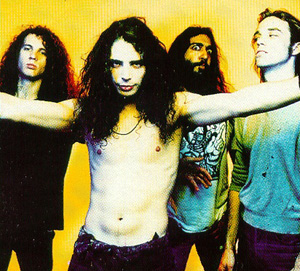
I was trying to think of a more recent counter-revolution, and what I came up with was the change in popular music from 1994-1997. Some of the hits of 1994 included "Black Hole Sun" by Soundgarden.
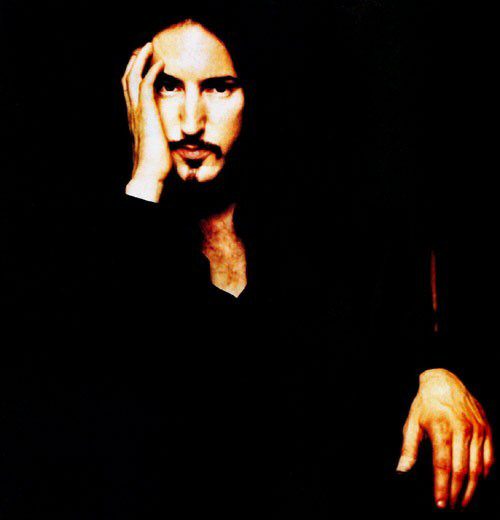
Or maybe Beck's "Loser" was more your style back then. Maybe "Closer" by Nine Inch Nails. Ya know, Trent Reznor:
In 1997, Hanson was one of the most popular groups of the year. That's right, these guys:
Mmmbop, that's a change. A quick change. A major change. I'm just saying, things are changing rapidly now. Who knows where we'll be three years from now. Maybe we'll be back to bunny ears and rotary phones.
There are two reasons why these ideas cannot be debated. First, annoyingly, Garfield builds a really good case for both concepts. Second, we're living it. Here, let me show you. Answer the following questions in the comments section below:
1) When was the last time you listened to the radio, either public or commercial?
2) When was the last time you watched a television show live, when it was actually on, without fast forwarding through commercials?
3) When was the last time you learned about a news story from the newspaper or television BEFORE learning about it on the web?
Garfield presents all of this information with the passionate position that this is the new world order. This is a revolution in progress.
Where the title comes in
I don't argue with the fact that we're in a revolution now. But again I must come back to the fact that it is in human nature to counter things that are revolutionary eventually. Maybe right now nobody wants to pay for content. Everyone can be a resource. Nothing needs to go through pesky quality control. But maybe people will change over time. Maybe they'll say, "Man, I miss the days of the New York Times (before they were known for plagiarism) and Walter Cronkite. I wish we had content of a higher quality. Heck, I'd pay for it.
I was trying to think of a more recent counter-revolution, and what I came up with was the change in popular music from 1994-1997. Some of the hits of 1994 included "Black Hole Sun" by Soundgarden.
Or maybe Beck's "Loser" was more your style back then. Maybe "Closer" by Nine Inch Nails. Ya know, Trent Reznor:
In 1997, Hanson was one of the most popular groups of the year. That's right, these guys:
Mmmbop, that's a change. A quick change. A major change. I'm just saying, things are changing rapidly now. Who knows where we'll be three years from now. Maybe we'll be back to bunny ears and rotary phones.
Tuesday, June 15, 2010
Where Humanity Meets TMI
When I was younger, before I knew better, a shake of the hand was enough to get me to start talking like I was at a Confessional. "Hi, my name is Margie, and here is my life story as of now. How about you?"
Thankfully, it was pointed out to me at a fairly early age that this wasn't the smartest approach to take. However, this conflicts with the evolution of the internet, which has become everyone's Confessional Booth at one time or another. We say things online that we probably wouldn't dream of saying in any other situation, and we do it because the internet allows us to be both personal and anonymous.
There are a couple of things in my life that I talk about online that are very personal, but I talk about them among my friends because it's important to do so. You will not find those things in my professional blog, however. I will not be tweeting traffic or offering a "share this" button. I like to keep track of who might know what about me. Call me old-fashioned.
This is on my mind because over the last couple of weeks, I have seen a flurry of posts from professional blogs (as in, tied to a business) that have discussed deeply personal topics. I found a couple of these blogs because people I follow on Twitter recommended them. A couple more were tweeted by people I follow directly.
Be human, but put your clothes on
I kind of wanted to avert my eyes after reading the first sentence or two of some of these blogs. I felt uncomfortable reading such personal information from a person I only know as a face and a Twitter handle. And what if I get to know that person better? Then this knowledge will already be in my pocket. There won't be a need for the "discovery phase" of friendship.
I understand the value of adding some personal details to a professional blog. Brogan & Smith talk about this in Trust Agents. A picture of your kids now and then, a mention of a birthday, these things make you seem real, more accessible. But that is very different from laying your most personal, intimate life details into the internet ether. It might be a fine line, but for me, it's a line nonetheless.
Remember where you are
David Meerman Scott talks about "losing control" of your PR and advertising. Let people share, let people evangelize for you. But losing control of your personal details can create uncomfortable and perhaps even dangerous situations. Do you want someone you don't know retweeting a post about a spat that you had with your spouse? Do you want someone you don't know sharing a post on Facebook about how you think your boss is dumb?
I view this blog as sitting at a table in the middle of a really busy, crowded party. I'm over here doing my thing, and if you come and sit with me for awhile, that's great. Then you'll get up and go to a different table. Maybe you'll recount our little conversation, maybe you won't. Under *those* circumstances, would you use that little blurp in time to reveal your most intimate secrets?
That square box holds real people
Computers are kind of creepy in a way, if you really think about them. They are static little wonders that enable us to connect to tons of people. We have no idea who, but they're in this little box. It's important to keep track of your own humanity, but it's also important to remember you're dealing with other humans as well.
People often say that if you wouldn't say something to or in front of your grandmother, you shouldn't say it online. I go one step further. If you wouldn't say something in front of anyone in "real life," you shouldn't say it online.
Just something to ponder.
Image by Hilde Vanstraelen. http://www.sxc.hu/profile/biewoef
Thankfully, it was pointed out to me at a fairly early age that this wasn't the smartest approach to take. However, this conflicts with the evolution of the internet, which has become everyone's Confessional Booth at one time or another. We say things online that we probably wouldn't dream of saying in any other situation, and we do it because the internet allows us to be both personal and anonymous.
There are a couple of things in my life that I talk about online that are very personal, but I talk about them among my friends because it's important to do so. You will not find those things in my professional blog, however. I will not be tweeting traffic or offering a "share this" button. I like to keep track of who might know what about me. Call me old-fashioned.
This is on my mind because over the last couple of weeks, I have seen a flurry of posts from professional blogs (as in, tied to a business) that have discussed deeply personal topics. I found a couple of these blogs because people I follow on Twitter recommended them. A couple more were tweeted by people I follow directly.
Be human, but put your clothes on
I kind of wanted to avert my eyes after reading the first sentence or two of some of these blogs. I felt uncomfortable reading such personal information from a person I only know as a face and a Twitter handle. And what if I get to know that person better? Then this knowledge will already be in my pocket. There won't be a need for the "discovery phase" of friendship.
I understand the value of adding some personal details to a professional blog. Brogan & Smith talk about this in Trust Agents. A picture of your kids now and then, a mention of a birthday, these things make you seem real, more accessible. But that is very different from laying your most personal, intimate life details into the internet ether. It might be a fine line, but for me, it's a line nonetheless.
Remember where you are
David Meerman Scott talks about "losing control" of your PR and advertising. Let people share, let people evangelize for you. But losing control of your personal details can create uncomfortable and perhaps even dangerous situations. Do you want someone you don't know retweeting a post about a spat that you had with your spouse? Do you want someone you don't know sharing a post on Facebook about how you think your boss is dumb?
I view this blog as sitting at a table in the middle of a really busy, crowded party. I'm over here doing my thing, and if you come and sit with me for awhile, that's great. Then you'll get up and go to a different table. Maybe you'll recount our little conversation, maybe you won't. Under *those* circumstances, would you use that little blurp in time to reveal your most intimate secrets?
That square box holds real people
Computers are kind of creepy in a way, if you really think about them. They are static little wonders that enable us to connect to tons of people. We have no idea who, but they're in this little box. It's important to keep track of your own humanity, but it's also important to remember you're dealing with other humans as well.
People often say that if you wouldn't say something to or in front of your grandmother, you shouldn't say it online. I go one step further. If you wouldn't say something in front of anyone in "real life," you shouldn't say it online.
Just something to ponder.
Image by Hilde Vanstraelen. http://www.sxc.hu/profile/biewoef
Monday, June 14, 2010
What is a professional blogger?
I had a very interesting exchange last evening during a Twitter "Blogchat." Basically a chat is just people getting together and talking (or tweeting) about the same thing (in this case Blogs). The comments are linked together because everyone uses a # before the name of the chat, and then you can follow the conversation by searching for that chat. Confusing if you're not on Twitter, but anyway...we were talking about Blogging :)
A fellow named Patrick Johnson asked me how I define a "pro" blogger. That question led us into a conversation that was unfortunately limited by the 140 character cage Twitter puts you in (as well as the fast-paced timing of the conversation). So, I thought I would revisit the conversation here (at least in sum) and get your thoughts!
Quality or Quantity
Do you consider a Blogger a "pro" because they have tons of comments and followers and links back to their blog, or do you consider a Blogger a "pro" because of the quality of the posts that are made? One might argue that if you base things on quantity, Al Gore's blog (http://blog.algore.com/) is professional. However, if I didn't know who Al Gore was, I wouldn't think the blog was all that professional. It doesn't have a particularly professional look to it (my opinion) and his posts generally are short and to the point, which doesn't seem to be the overriding style bloggers choose.
Is it possible to be a pro without clout?
Next question: can you be a successful or "professional" blogger if you aren't bringing some clout to the blog already? My answer to this question is yes. Blogging is attractive in part because it promises you that you can build a network. But not everyone's Blog achieves the status of say, Denise Wakeman's or Chris Brogan's. Are you more inclined to go to a Blog if it's someone you've heard of? Probably. Is it possible to get someone new into that cycle? Also probably, but that person might give up before that happens.
What is a "pro" and why do we need to define it?
I met a Native American artist once when I was in grad school. He was a Native American artist in that his ethnicity was Native American and his profession was "artist." However, he did not make traditional "Native American" art. He did what was in his head and heart. He said people kind of were confused by this, including his own family and friends. If you're a Native American you should want to present traditional themes so that your success can raise up those ideas into the mainstream. Similarly, he had trouble breaking through because when he billed himself as a Native American artist, people didn't see what they expected.
It's this kind of scenario that convinces me that categorizing people is dangerous. How would one define a professional blogger? In the end, it's probably a personal preference type of thing.
Does it matter if a person is a pro? I read blog posts if they're interesting. There are blogs that wander (for me) from really interesting to kind of blah. I don't think any less of that person...I just know that not every blog post is going to be a winner for everybody.
Then again, there are so many best practices for blogging that maybe it all does matter. Maybe I'm not taking the craft seriously enough.
What do you think?
Image by Faakhir Rizvi. http://www.sxc.hu/profile/fakhar
A fellow named Patrick Johnson asked me how I define a "pro" blogger. That question led us into a conversation that was unfortunately limited by the 140 character cage Twitter puts you in (as well as the fast-paced timing of the conversation). So, I thought I would revisit the conversation here (at least in sum) and get your thoughts!
Quality or Quantity
Do you consider a Blogger a "pro" because they have tons of comments and followers and links back to their blog, or do you consider a Blogger a "pro" because of the quality of the posts that are made? One might argue that if you base things on quantity, Al Gore's blog (http://blog.algore.com/) is professional. However, if I didn't know who Al Gore was, I wouldn't think the blog was all that professional. It doesn't have a particularly professional look to it (my opinion) and his posts generally are short and to the point, which doesn't seem to be the overriding style bloggers choose.
Is it possible to be a pro without clout?
Next question: can you be a successful or "professional" blogger if you aren't bringing some clout to the blog already? My answer to this question is yes. Blogging is attractive in part because it promises you that you can build a network. But not everyone's Blog achieves the status of say, Denise Wakeman's or Chris Brogan's. Are you more inclined to go to a Blog if it's someone you've heard of? Probably. Is it possible to get someone new into that cycle? Also probably, but that person might give up before that happens.
What is a "pro" and why do we need to define it?
I met a Native American artist once when I was in grad school. He was a Native American artist in that his ethnicity was Native American and his profession was "artist." However, he did not make traditional "Native American" art. He did what was in his head and heart. He said people kind of were confused by this, including his own family and friends. If you're a Native American you should want to present traditional themes so that your success can raise up those ideas into the mainstream. Similarly, he had trouble breaking through because when he billed himself as a Native American artist, people didn't see what they expected.
It's this kind of scenario that convinces me that categorizing people is dangerous. How would one define a professional blogger? In the end, it's probably a personal preference type of thing.
Does it matter if a person is a pro? I read blog posts if they're interesting. There are blogs that wander (for me) from really interesting to kind of blah. I don't think any less of that person...I just know that not every blog post is going to be a winner for everybody.
Then again, there are so many best practices for blogging that maybe it all does matter. Maybe I'm not taking the craft seriously enough.
What do you think?
Image by Faakhir Rizvi. http://www.sxc.hu/profile/fakhar
Sunday, June 13, 2010
Any Job Can Be Your Dream Job
As I've referenced before, my educational experience includes a Masters in Library & Information Science and a Masters in History. I often joke about the fact that those two degrees explain perfectly why I ended up working in and loving marketing. However, if I may be so bold, I would like to say that my experience is one that could be helpful to people right now. A lot of people, because of the financial realities of today, are being forced to take jobs that they might not like or that they might view as beneath them or not ideal. I thought about my journey of transitioning my head from academia to business, from History & Library Science to advertising and PR. I think it can broken down into three steps. And here they are.
1. Dedicate yourself to your job. Sure, you might not want to even consider the possibility that you could be in this thing for the long haul. But you are not going to feel good about your experience until you take the bull by the horns and say, "I'm going to do the best I can." Standing out and performing well is a challenge no matter what job you have. The less familiar you are with the job, the more interesting this path can be. But you will not be able to feel like you are living the dream until you take this first important step. As a sidenote, dedication also means learning. Learn everything you can about your job. Why were you trained the way you were? Why do people do things the way they do?
2. Look for things you love. No matter how unlikely it may seem, if you look, you will see traces of things you love in your new job. But you do have to look. I thought that I had wasted all of my time in school because I didn't see how there could be any remnant of Library Science or History in my marketing job. However, as I familiarized myself with my job and really dug into it, I realized that a key facet of marketing is understanding not only how to find things on the web but also to understand how people generally look for things on the web. Guess what a primary focus of the MLS degree is? I initially didn't see how my research skills could come in handy, but I found that I could enrich my experience as well as that of our clients if I brought my research skills, based on academia, into the business environment. You might be saying that that's all well and good. Maybe you're having to work retail or fast food or some other job that you just don't see how you can get any use out of. But look for things. Do you love dealing with people? Embrace that. Are you interested in business? Study how your managers delegate and do business. You never know what might pop up.
3. Strive to bring what you love to your job. Whether or not you find things already in place that you can love about your job, try to figure out ways to bring your own thumbprint to your work. Use your training and experience and make them relevant. You can't just do this to do this. It needs to make sense and it shouldn't end up creating any problems or more work for anyone else. But the possibilities are also endless. Bring your passions into your new job. Don't view them as mutually exclusive, but rather see how the jigsaw puzzle fits together.
If I hadn't actually pursued these three steps on my own and had some success with it, I might be sitting here saying what you might be saying. "All well and good, but..." Well, as Pee Wee Herman says, "Everyone has a big butt."
What do you wish you were doing right now? What elements of that job you had or really want are most appealing to you? How can those fit into what you are doing now?
We're all struggling to cope with this massively evolutionary environment we are in. We are all, in some way, either supporting someone who is having to settle in some way or having to settle ourselves. But this is not a dead-end path. It can be a fun path. A challenging path. A path of ambition and passion.
Try it out. Think about it. Let me know how it goes.
1. Dedicate yourself to your job. Sure, you might not want to even consider the possibility that you could be in this thing for the long haul. But you are not going to feel good about your experience until you take the bull by the horns and say, "I'm going to do the best I can." Standing out and performing well is a challenge no matter what job you have. The less familiar you are with the job, the more interesting this path can be. But you will not be able to feel like you are living the dream until you take this first important step. As a sidenote, dedication also means learning. Learn everything you can about your job. Why were you trained the way you were? Why do people do things the way they do?
2. Look for things you love. No matter how unlikely it may seem, if you look, you will see traces of things you love in your new job. But you do have to look. I thought that I had wasted all of my time in school because I didn't see how there could be any remnant of Library Science or History in my marketing job. However, as I familiarized myself with my job and really dug into it, I realized that a key facet of marketing is understanding not only how to find things on the web but also to understand how people generally look for things on the web. Guess what a primary focus of the MLS degree is? I initially didn't see how my research skills could come in handy, but I found that I could enrich my experience as well as that of our clients if I brought my research skills, based on academia, into the business environment. You might be saying that that's all well and good. Maybe you're having to work retail or fast food or some other job that you just don't see how you can get any use out of. But look for things. Do you love dealing with people? Embrace that. Are you interested in business? Study how your managers delegate and do business. You never know what might pop up.
3. Strive to bring what you love to your job. Whether or not you find things already in place that you can love about your job, try to figure out ways to bring your own thumbprint to your work. Use your training and experience and make them relevant. You can't just do this to do this. It needs to make sense and it shouldn't end up creating any problems or more work for anyone else. But the possibilities are also endless. Bring your passions into your new job. Don't view them as mutually exclusive, but rather see how the jigsaw puzzle fits together.
If I hadn't actually pursued these three steps on my own and had some success with it, I might be sitting here saying what you might be saying. "All well and good, but..." Well, as Pee Wee Herman says, "Everyone has a big butt."
What do you wish you were doing right now? What elements of that job you had or really want are most appealing to you? How can those fit into what you are doing now?
We're all struggling to cope with this massively evolutionary environment we are in. We are all, in some way, either supporting someone who is having to settle in some way or having to settle ourselves. But this is not a dead-end path. It can be a fun path. A challenging path. A path of ambition and passion.
Try it out. Think about it. Let me know how it goes.
Saturday, June 12, 2010
I'm a Bibliography Nut
Even though I have been away from the Ivory Tower for six years now, there are still some parts of it that I just can't shake off. One thing that I would have shuddered about 6 years ago is that I seem to have developed a great love of bibliographies. When I read a book I really enjoy these days, I want to try to figure out how the author or authors came to that state of being. I want to know what molded them and what might have been on their minds as these ideas came into their heads.
I just finished Trust Agents. It is peppered with book references, and I thought it would be really interesting not just to look at the books that are mentioned by name but also to read many of them. I'll probably not read Polgar's Chess book, but otherwise...:)
I got permission to put out this list from the authors. Think I got everything. Hope it's useful!
Image by Dora Pete. http://www.sxc.hu/profile/porah
I just finished Trust Agents. It is peppered with book references, and I thought it would be really interesting not just to look at the books that are mentioned by name but also to read many of them. I'll probably not read Polgar's Chess book, but otherwise...:)
I got permission to put out this list from the authors. Think I got everything. Hope it's useful!
| Allen | David | Getting Things Done |
| Anderson | Chris | The Long Tail |
| Canterucci | Jim | Personal Brilliance |
| Collins | Jim | Good to Great |
| Covey | Stephen | The 7 Habits of Highly Effective People |
| DeBono | Edward | Serious Creativity |
| DeBono | Edward | How To Be More Interesting |
| Edwards | Betty | Drawing on the Right Side of the Brain |
| Ferriss | Tim | 4-hour Workweek |
| Friedman | Thomas | The World is Flat |
| Gladwell | Malcolm | The Tipping Point |
| Hill | Napoleon | Think and Grow Rich |
| Hunt | Tara | The Whuffie Factor |
| Hurst | Mark | Bit Literacy |
| Joel | Mitch | Six Pixels of Separation |
| Madson | Patricia Ryan | Improv Wisdom |
| Maister | David, Charles H. Green and Robert M. Galford | The Trusted Advisor |
| Mann | Merlin | Inbox Zero |
| McLuhan | Marshall | Understanding Media: The Extensions of Man |
| Polgar | Laszlo | 5334 Problems, Combinations and Games |
| Putnam | Robert | Bowling Alone: The Collapse and Revival of American Community |
| Rheingold | Howard | The Virtual Community |
| Scoble | Robert and Shel Israel | Naked Conversations |
| Shirky | Clay | Here Comes Everybody |
| Surowiecki | James | Wisdom of Crowds |
| Taleb | Nassim Nicholas | The Black Swan: The Impact of the Highly Improbable |
Image by Dora Pete. http://www.sxc.hu/profile/porah
Subscribe to:
Posts (Atom)