Back in the day, there was a television campaign that has since been parodied to death. "Pork: The Other White Meat," the ads drilled into our heads.
These days, using analytics to measure online marketing efforts is something on everyone's minds. Even technophobes are starting to familiarize themselves with phrases like "exit rate" or "bounce rate." Using analytics to measure web campaigns might be today's marketing chicken.
Like the ads of yore, I am here to talk about something that is similar in a lot of ways to measuring online tactics. It's just the "other" thing you can measure with analytics. Today's marketing pork. That would be everything you do "offline."
This concept was brought to my attention about a month ago when I watched a presentation by the incomparable Avinash Kaushik. Kaushik, if you have not encountered him yet, is a master of Google Analytics. He can make reading the program seem like "reading" Amelia Bedelia, and he can inspire you to measure anything and everything you do. In this particular presentation, Kaushik was preaching about the value of using Analytics programs to measure marketing tactics that are not happening in the online world.
A novel concept, to be sure, but the fact is that even though a lot of people are not talking about this as a key to success, programs like Google Analytics can measure the effectiveness of campaigns that go nowhere near a computer. Here are some examples of how offline marketing efforts can be measured using Google Analytics.
Print Advertising Campaign: There are two ways Google Analytics can be used to measure the success of a print advertising campaign.
For a general, impressionistic idea, take a benchmark of your stats at the beginning of a month, then look again after your ad hits. Keep an eye on your stats for the next week or so. Does your traffic spike? If so, then you are probably effectively engaging your customers with a strong call to action.
The other way to measure a print ad campaign's success is to create specific landing pages on your site, knowing that any traffic to those pages will be from your ad campaign. In this latter scenario, you can not only track how much traffic comes to that page, but you can also find out if people are interested enough to visit other pages of your website or if they simply bounce out of your site entirely.
Trade Show: Google Analytics can be a really effective way to measure the impression a trade show has made on your prospects and customers. We recommend measuring at three different stages:
Leading up to the show. Are your promotion efforts working? Does your traffic spike after sending out a pre-show direct mail piece, for example?
During the show: Are people finding your booth and your sales materials, along with your message, interesting? Benchmark your statistics before you leave for the show, then take a look after the show. Did your efforts seem to pay off? Again, a landing page or a promotion can really put a fine point on your measuring in these cases.
Don't forget about those post-show follow-ups. Scanning a person's name tag does not a lead make. Send a nice folder stuffed with your finest literature pieces along with a link to your website. Does your traffic spike a few weeks after the show has ended?
News Release: In the case of a news release, take a look at your stats for specific pages that would be affected, namely anywhere the new product or feature is presented. Although you can look for a spike immediately after a news release is sent, that won't really tell the whole story. It can sometimes take months for a news release to get published in a leading publication. When you find out that your story has been picked up, keep an eye on you analytics for 2-3 days after that. Does it move?
Direct Mail: Much like an ad, a direct mail piece can be developed so that it entices recipients to visit your website. A call to action or a promotion of some type is especially effective in these cases. Again, take a benchmark of your overall site, but a specific landing page can be a big help in tracking a direct mail campaign in the same way it can help to track a print ad's success.
Google Analytics is not perfect, of course. A campaign should not be panned or made the one and only focus based on the rise and fall of the traffic graph. However, Google Analytics can give you a pretty good clue as to how offline and online campaigns are performing, and actionable items can follow.
Have you had experience measuring offline campaigns using Google Analytics? I'd love to hear about it!
Image by Anna Moderska. http://www.sxc.hu/profile/morderska
I'm a real life "Mad man." Except that I'm a woman and I live in Ohio. You know Don Draper crochets in his free time, though.
Thursday, July 15, 2010
Tuesday, July 13, 2010
Checklist: Launching a Website
Today's checklist: 25 Things to consider before launching that website!
1. Who will be hosting my website and why am I choosing that option?
2. What expectations have my competitors already established for websites in this industry?
3. What will my URL be, and should I purchase other domain names for protection?
4. What keywords do I need to incorporate into page titles, meta tags, and body copy?
5. Will the tone of my website be "you," "us," or "we"?
6. What are my calls to action going to be?
7. How will I drive traffic to this website once it launches?
8. What do I need to get across on the homepage?
9. How will I create internal links between pages?
10. How will I present my sales network?
11. How will I create an opportunity for interaction for visitors? Is that important to me?
12. What analytics system will I use to measure the success of my site?
13. What would I consider a successful launch of the website?
14. What functionality do I want visitors to notice when they visit the site?
15. What is my plan of attack if analytics shows a high bounce or exit range from certain pages?
16. Who will be responsible for maintenance, like adding news releases, trade shows, etc?
17. Whose contact information will be made available on the site? Is there corporate agreement about that?
18. Will the design of the site revolve around a corporate logo or a leading product?
19. Will there be e-commerce capabilities?
20. Will there be special programming needs like image galleries, forms, or videos?
21. How will the look and content of the new website be filtered through all channels of the organization?
22. How will the sales force be able to use the site as a selling tool?
23. Will there be a blog built into the site? Who will be the voice of that blog?
24. Is there room for the site to grow?
25. Should the site be translated into different languages for international visitors?
Believe it or not, this is just the beginning of what goes into the launch of a website, and these are the basics. If there are steps that are important that you do not see here, feel free to add them!
1. Who will be hosting my website and why am I choosing that option?
2. What expectations have my competitors already established for websites in this industry?
3. What will my URL be, and should I purchase other domain names for protection?
4. What keywords do I need to incorporate into page titles, meta tags, and body copy?
5. Will the tone of my website be "you," "us," or "we"?
6. What are my calls to action going to be?
7. How will I drive traffic to this website once it launches?
8. What do I need to get across on the homepage?
9. How will I create internal links between pages?
10. How will I present my sales network?
11. How will I create an opportunity for interaction for visitors? Is that important to me?
12. What analytics system will I use to measure the success of my site?
13. What would I consider a successful launch of the website?
14. What functionality do I want visitors to notice when they visit the site?
15. What is my plan of attack if analytics shows a high bounce or exit range from certain pages?
16. Who will be responsible for maintenance, like adding news releases, trade shows, etc?
17. Whose contact information will be made available on the site? Is there corporate agreement about that?
18. Will the design of the site revolve around a corporate logo or a leading product?
19. Will there be e-commerce capabilities?
20. Will there be special programming needs like image galleries, forms, or videos?
21. How will the look and content of the new website be filtered through all channels of the organization?
22. How will the sales force be able to use the site as a selling tool?
23. Will there be a blog built into the site? Who will be the voice of that blog?
24. Is there room for the site to grow?
25. Should the site be translated into different languages for international visitors?
Believe it or not, this is just the beginning of what goes into the launch of a website, and these are the basics. If there are steps that are important that you do not see here, feel free to add them!
Monday, July 12, 2010
Check? Check 1, check 2...
This week feels like a checklist kind of week, so I thought I would ride the wave. Every day this week, I will post a checklist of things to consider as you approach different marketing tactics or strategies. If I missed something, feel free to add to it!
Today's checklist: 25 Things To Consider Before Blogging
1. Am I blogging as an individual or will the blog be a team effort?
2. If a team, how will I choose my co-bloggers?
3. Is this blog going to be personal or work-related?
4. What am I hoping to accomplish with this blog?
5. Who is my audience?
6. If business related, does this blog fall within the parameters of my business/company/corporation?
7. What platform am I going to use, and why?
8. What voice am I going to use? Will I be professional and "button-down"? Casual?
9. How often do I want to post a blog?
10. Is my answer for #9 feasible?
11. What are keywords that I want to emphasize in my blog?
12. What will I say in my profile?
13. What will I use for my user picture?
14. What will the name of my blog be?
15. How will I promote my blog?
16. What would I define as a successful blog?
17. How will I measure the success of my blog?
18. Will I include a "blogroll" on my blog?
19. Will I include a "search" function on my blog?
20. Will my blog be monetized?
21. Will I import my blog into LinkedIn or Facebook (or both?)
22. What will I do if I get negative or little reaction to my blog or post?
23. If a team blog, how will the dynamics work? Will the posts attributed to individual writers?
24. Will you include video blogging or podcasting on your blog site?
25. How will you control and encourage comments and commenters?
Anything I missed? Let me know and I'll add to it!
Image credit: http://www.sxc.hu/profile/Fanginhoon
Today's checklist: 25 Things To Consider Before Blogging
1. Am I blogging as an individual or will the blog be a team effort?
2. If a team, how will I choose my co-bloggers?
3. Is this blog going to be personal or work-related?
4. What am I hoping to accomplish with this blog?
5. Who is my audience?
6. If business related, does this blog fall within the parameters of my business/company/corporation?
7. What platform am I going to use, and why?
8. What voice am I going to use? Will I be professional and "button-down"? Casual?
9. How often do I want to post a blog?
10. Is my answer for #9 feasible?
11. What are keywords that I want to emphasize in my blog?
12. What will I say in my profile?
13. What will I use for my user picture?
14. What will the name of my blog be?
15. How will I promote my blog?
16. What would I define as a successful blog?
17. How will I measure the success of my blog?
18. Will I include a "blogroll" on my blog?
19. Will I include a "search" function on my blog?
20. Will my blog be monetized?
21. Will I import my blog into LinkedIn or Facebook (or both?)
22. What will I do if I get negative or little reaction to my blog or post?
23. If a team blog, how will the dynamics work? Will the posts attributed to individual writers?
24. Will you include video blogging or podcasting on your blog site?
25. How will you control and encourage comments and commenters?
Anything I missed? Let me know and I'll add to it!
Image credit: http://www.sxc.hu/profile/Fanginhoon
Saturday, July 10, 2010
What is influence?
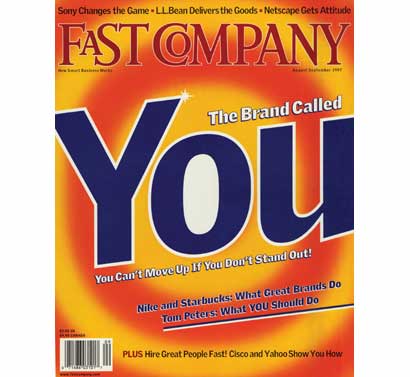
As you may have heard, Fast Company has begun a little experiment on Twitter called The Influence Project. The concept is pretty simple on paper. You sign up on the Fast Company site and you see how many people you can motivate to click a link that you post. The more clicks you receive, the more influential you appear. The folks at Fast Company have promised that the most influential people will have their pictures shown on the cover of the November 2010 issue (Go ahead and check out Fast Company's definition if you're interested).
Not surprisingly, the reactions to this project have been all over the board. Experts like Alltop's Guy Kawasaki and Facebook Queen Mari Smith are for it. Lots of other folks are furious at Fast Company for creating a project that seems to give spam the green light. I don't know where you stand, but me? I can see both sides of the argument.
The question at hand: what is influence?
Whether or not it's the intended objective, all of the noise about this project has made me ponder what influence truly is. It also makes me wonder if influence can be made tangible by people clicking on some links. My gut instinct is to say that if influence is something that can be measured in clicks to a website from Twitter, there are going to be a lot of disappointed and confused people out there.
So what is influence, really? If you go to dictionary.com, you'll find this as definition one:
"The capacity or power of persons or things to be a compelling force on or produce effects on the actions, behavior, opinions, etc., of others."
I guess that's a serviceable definition. You can't really argue with it. And by this definition, The Influence Project is not a misnomer. You're compelling people to click on a link, and the number of people who do that are metrics for your influence. Fine. But doesn't that sound kind of hollow? Even in the world of Web 2.0, which is kind of seeming like the flower child when compared to advertising, making people just click a button does not an influential person make. And by the way, you could post till the cows come home that people should click a link, but if you post a tweet and you have no followers, is there really a chance to be influential?
Satire or Science
There are some who say that The Influence Project is in part meant to be a sort of satire or parody of what the online world is like. It's meant to show how easy it is to get people to click things, how easy it is to game the system. The problem is that it's also kind of presented as a science project or a rational scientific experiment. In the case of the latter, there are a few flaws that I'd like to point out.
1. As already mentioned, you already have to have some influence in order to show how influential you are. If you have 500,000 followers and you post a link, statistically speaking you're going to have a better chance at being "influential" than a person who has 30 followers.
2. If you are already influential (if you measure influence in number of followers, which is a really bad idea), you have probably built up a lot of credibility (or you're really durned famous). In either case, you can afford to be 100% straightforward. "Hey guys, please click this link and vote for me to be influential. I've got a book coming out in October and the extra PR exposure would be GREAT! Love and kisses!" On the other hand, if you've got a kind of shaky base or not a lot of followers, this would be hinging on a breach of trust. That's a big no no.
3. In the Social Media world, it's easy enough to get people to click things. Heck, a person with minimal HTML knowledge can mask a link to the influence page under an H-Ref tag and no one would be the wiser. Real influence is what you do with those clicks. In the marketing world, influence would be how many people ask for a quote after clicking. In the Social Media world, maybe you see how many people donate to a charitable cause after clicking, or how many people download your e-book. Getting folks to click a link, openly or not, is not really the strongest measure of influence.
4. Pulling on someone else's influence: Let's imagine the following scenario. I sign up for The Influence Project and I post to Twitter saying, "Oh, such and such expert or celebrity just posted a great blog. Click here!" You click the link and end up at my Influence Project page. Now, did you click because I posted the link or did you click because you wanted to hear what that OTHER person had to say? I won't be offended. It's hypothetical :) But this is a problem. Is the Influence Project truly measuring everyone's influence? It's an easy way to cheat, right?
5. And speaking of cheating, it's really easy to load the game to win. Now Brogan and Smith might say that like any game, the rules are made to be adapted, but I worry that this is kind of setting a dangerous precedent. "Oh, I see, so getting people to click to MY website would REALLY show how influential I am. So how about if I mask my links with misleading information. "Here's a breaking news story." "Here's a quote from LeBron James saying that he has changed his mind." Click click click. Away goes your credibility. Is it worth it?
Who Wins?
In the end, Fast Company is the ultimate winner in the Influence Project, not the people whose pictures get into the November issue, not even Guy Kawasaki. The publication is being discussed all over the place, as is the project. I've driven traffic to their website, and everyone who is participating is doing the same thing. There is build-up for a November issue, which as we media types know can be a tough month for magazines.
As for the people who might be the most "influential" based on this project, will they really be winners? The assumption of a lot of people will be that they either spammed their friends or otherwise ruthlessly gamed the system. It will be a means for the rich to get richer in terms of followers and Twitter influence. And I'm not really sure a lot of people will look at these folks, once the whole project is explained, and say, "Oh Okay. I need to follow all of them right away."
In the end, those winners will just have proven that they got lots of people to click. I tend to unfollow those types of people pretty quickly myself.
What do you think of The Influence Project? Do you have pros for my cons? Are you participating? Let me know!
Not surprisingly, the reactions to this project have been all over the board. Experts like Alltop's Guy Kawasaki and Facebook Queen Mari Smith are for it. Lots of other folks are furious at Fast Company for creating a project that seems to give spam the green light. I don't know where you stand, but me? I can see both sides of the argument.
The question at hand: what is influence?
Whether or not it's the intended objective, all of the noise about this project has made me ponder what influence truly is. It also makes me wonder if influence can be made tangible by people clicking on some links. My gut instinct is to say that if influence is something that can be measured in clicks to a website from Twitter, there are going to be a lot of disappointed and confused people out there.
So what is influence, really? If you go to dictionary.com, you'll find this as definition one:
"The capacity or power of persons or things to be a compelling force on or produce effects on the actions, behavior, opinions, etc., of others."
I guess that's a serviceable definition. You can't really argue with it. And by this definition, The Influence Project is not a misnomer. You're compelling people to click on a link, and the number of people who do that are metrics for your influence. Fine. But doesn't that sound kind of hollow? Even in the world of Web 2.0, which is kind of seeming like the flower child when compared to advertising, making people just click a button does not an influential person make. And by the way, you could post till the cows come home that people should click a link, but if you post a tweet and you have no followers, is there really a chance to be influential?
Satire or Science
There are some who say that The Influence Project is in part meant to be a sort of satire or parody of what the online world is like. It's meant to show how easy it is to get people to click things, how easy it is to game the system. The problem is that it's also kind of presented as a science project or a rational scientific experiment. In the case of the latter, there are a few flaws that I'd like to point out.
1. As already mentioned, you already have to have some influence in order to show how influential you are. If you have 500,000 followers and you post a link, statistically speaking you're going to have a better chance at being "influential" than a person who has 30 followers.
2. If you are already influential (if you measure influence in number of followers, which is a really bad idea), you have probably built up a lot of credibility (or you're really durned famous). In either case, you can afford to be 100% straightforward. "Hey guys, please click this link and vote for me to be influential. I've got a book coming out in October and the extra PR exposure would be GREAT! Love and kisses!" On the other hand, if you've got a kind of shaky base or not a lot of followers, this would be hinging on a breach of trust. That's a big no no.
3. In the Social Media world, it's easy enough to get people to click things. Heck, a person with minimal HTML knowledge can mask a link to the influence page under an H-Ref tag and no one would be the wiser. Real influence is what you do with those clicks. In the marketing world, influence would be how many people ask for a quote after clicking. In the Social Media world, maybe you see how many people donate to a charitable cause after clicking, or how many people download your e-book. Getting folks to click a link, openly or not, is not really the strongest measure of influence.
4. Pulling on someone else's influence: Let's imagine the following scenario. I sign up for The Influence Project and I post to Twitter saying, "Oh, such and such expert or celebrity just posted a great blog. Click here!" You click the link and end up at my Influence Project page. Now, did you click because I posted the link or did you click because you wanted to hear what that OTHER person had to say? I won't be offended. It's hypothetical :) But this is a problem. Is the Influence Project truly measuring everyone's influence? It's an easy way to cheat, right?
5. And speaking of cheating, it's really easy to load the game to win. Now Brogan and Smith might say that like any game, the rules are made to be adapted, but I worry that this is kind of setting a dangerous precedent. "Oh, I see, so getting people to click to MY website would REALLY show how influential I am. So how about if I mask my links with misleading information. "Here's a breaking news story." "Here's a quote from LeBron James saying that he has changed his mind." Click click click. Away goes your credibility. Is it worth it?
Who Wins?
In the end, Fast Company is the ultimate winner in the Influence Project, not the people whose pictures get into the November issue, not even Guy Kawasaki. The publication is being discussed all over the place, as is the project. I've driven traffic to their website, and everyone who is participating is doing the same thing. There is build-up for a November issue, which as we media types know can be a tough month for magazines.
As for the people who might be the most "influential" based on this project, will they really be winners? The assumption of a lot of people will be that they either spammed their friends or otherwise ruthlessly gamed the system. It will be a means for the rich to get richer in terms of followers and Twitter influence. And I'm not really sure a lot of people will look at these folks, once the whole project is explained, and say, "Oh Okay. I need to follow all of them right away."
In the end, those winners will just have proven that they got lots of people to click. I tend to unfollow those types of people pretty quickly myself.
What do you think of The Influence Project? Do you have pros for my cons? Are you participating? Let me know!
Friday, July 9, 2010
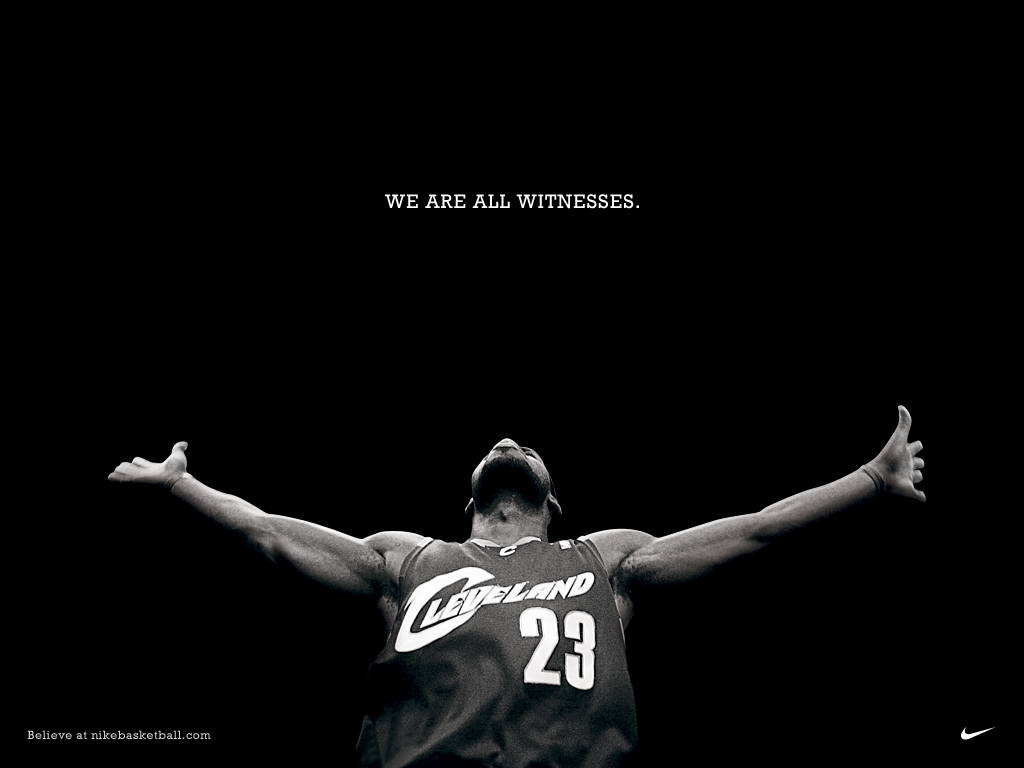
My open letter to LeBron: It's not just business. It's personal.
Dear Mr. James (Your Highness),
You said last night that when you awoke yesterday morning, you knew your decision. When I woke up this morning, the first thing that popped into my head was a scene from the movie You've Got Mail. Tom Hanks' character, who owns a huge book store meant to be something like Barnes & Noble, moves down the street from Meg Ryan's tiny little family-owned book store. She knows it will destroy her business, but he says, "It's just business. It's not personal." "It is personal," she says. "It's personal to me."
LeBron, the decision you made may have been business for you and your "team." It may be business to Miami. It may be business for LA and New York and Chicago.
It is not business to us here in Northeast Ohio. It is personal.
We know the areas where you used to roam as a kid. A poor kid who was lucky enough to get guidance from people around you. Akron people. We know the shelter that helped out your mom, a shelter, by the way, that is having a hard time providing service to women like your mom today because their funds have been slashed and burned. We drive by your school, LeBron, where your first chapter of dreams came true. We went to those games and we thought, "Could this really be happening here?" We watched one of our own get signed to our basketball team, our poor Cavs, who were best known for crinkling up like aluminum foil as Michael Jordan hit "the shot."
Our Cavs, by the way, are now known as the team that suffered most from "the decision."
Do you remember when you were a kid and the Goodyear blimp would fly overhead? It's something all of us Akron people get excited about. Back when you were a little kid, the blimp was called The Spirit of Akron. It would show up on television, soaring above games. It would fly over our houses and we would soar up there in the clouds in the Spirit of Akron's wake.
A few years ago, the name of the blimp changed. It was the Spirit of Goodyear. All of our ties to that little bubble of air were broken after years of gazing upward.
You were our new spirit of Akron, LeBron. You were our proof that good things can happen here. Good things can come from here. You made people familiar with a side of Akron that had nothing to do with all of the jokes and mockery. You were putting us on the map in a good way, LeBron. And in these really dark economic times, when businesses and stores are closing, when our libraries and schools are dying here, LeBron, you gave us something to look forward to, something to be really proud of.
When I was 25 I felt the big 3-0 pushing down on me. I had goals I wanted to reach by age 30, and I felt like I would be a failure if I didn't meet all of those objectives. Granted, I didn't have the spotlight on me like you do, but I'll tell you something that you come to appreciate after you get through your twenties. You appreciate your community. You appreciate being surrounded by places and people who have been there for you your whole life. That's not to say that people always come back to where they're from, but you start getting nostalgic. You will miss that in Miami. It will never be home to you. But because of the way you handled this, I'm not sure your emotional home here, your spiritual home, will be waiting for you.
You said last night that winning has always been the most important thing to you. It broke my heart that you couldn't say that winning in Miami would be less sweet than it would have been to win a championship for your hometown. You will learn, eventually, that winning a championship is not enough to fulfill you, LeBron. And winning can mean different things. To us, your hometown crowd, winning would have been taking less money, as you are willing to do, and saying that you would stay with us till you brought a championship home. That is the true definition of loyalty. Saying that you don't care how hurt the fans are, saying that you hope we treat you with respect, is like spitting in all of our faces, LeBron. How could you?
You always say that you are a big fan of the Yankees. So you probably know all about Lou Gehrig and the amazing speech he made when he had to retire. Lou Gehrig was from New York. He started out in tough circumstances but found that sports gave him a way out. He got to play for his home team, and he stayed there. You could say that it was easier for him to stay because the Yankees won. Maybe. But I think Lou Gehrig valued the reward of playing in front of his family, his friends, and all of the people that cheered him on from the very beginning. He wasn't the luckiest man in the world, at the beginning of a crippling disease, because he had won championships. He was the luckiest man in the world, LeBron, because he had forged a powerful bond with his fans, with his teammates, and with history. That is a winner.
Business is not always something that is without emotion. Decisions cannot always be made separate from the results. The way you handled this process, the way you announced this, the way you so rapidly "moved on" last night, away from Cleveland, away from your home, and towards a city that only knows you as "the king," may have all been good for your franchise. But when you retire, when your boys are ready to go to high school and college, when they want to see where your glory days were spent, where they were born, you will have to explain how and why that all ended. And that's why I'm not angry with you, LeBron. You might not see the ramifications of your actions now. You might win 15 championships. You might become the King of Miami. But eventually you will have to explain to yourself and your boys and your grandkids that you left the hometown that you claimed to love because of business reasons, because it's what the 25-year-old you thought would make you happy.
Good luck with that, LeBron.
You said last night that when you awoke yesterday morning, you knew your decision. When I woke up this morning, the first thing that popped into my head was a scene from the movie You've Got Mail. Tom Hanks' character, who owns a huge book store meant to be something like Barnes & Noble, moves down the street from Meg Ryan's tiny little family-owned book store. She knows it will destroy her business, but he says, "It's just business. It's not personal." "It is personal," she says. "It's personal to me."
LeBron, the decision you made may have been business for you and your "team." It may be business to Miami. It may be business for LA and New York and Chicago.
It is not business to us here in Northeast Ohio. It is personal.
We know the areas where you used to roam as a kid. A poor kid who was lucky enough to get guidance from people around you. Akron people. We know the shelter that helped out your mom, a shelter, by the way, that is having a hard time providing service to women like your mom today because their funds have been slashed and burned. We drive by your school, LeBron, where your first chapter of dreams came true. We went to those games and we thought, "Could this really be happening here?" We watched one of our own get signed to our basketball team, our poor Cavs, who were best known for crinkling up like aluminum foil as Michael Jordan hit "the shot."
Our Cavs, by the way, are now known as the team that suffered most from "the decision."
Do you remember when you were a kid and the Goodyear blimp would fly overhead? It's something all of us Akron people get excited about. Back when you were a little kid, the blimp was called The Spirit of Akron. It would show up on television, soaring above games. It would fly over our houses and we would soar up there in the clouds in the Spirit of Akron's wake.
A few years ago, the name of the blimp changed. It was the Spirit of Goodyear. All of our ties to that little bubble of air were broken after years of gazing upward.
You were our new spirit of Akron, LeBron. You were our proof that good things can happen here. Good things can come from here. You made people familiar with a side of Akron that had nothing to do with all of the jokes and mockery. You were putting us on the map in a good way, LeBron. And in these really dark economic times, when businesses and stores are closing, when our libraries and schools are dying here, LeBron, you gave us something to look forward to, something to be really proud of.
When I was 25 I felt the big 3-0 pushing down on me. I had goals I wanted to reach by age 30, and I felt like I would be a failure if I didn't meet all of those objectives. Granted, I didn't have the spotlight on me like you do, but I'll tell you something that you come to appreciate after you get through your twenties. You appreciate your community. You appreciate being surrounded by places and people who have been there for you your whole life. That's not to say that people always come back to where they're from, but you start getting nostalgic. You will miss that in Miami. It will never be home to you. But because of the way you handled this, I'm not sure your emotional home here, your spiritual home, will be waiting for you.
You said last night that winning has always been the most important thing to you. It broke my heart that you couldn't say that winning in Miami would be less sweet than it would have been to win a championship for your hometown. You will learn, eventually, that winning a championship is not enough to fulfill you, LeBron. And winning can mean different things. To us, your hometown crowd, winning would have been taking less money, as you are willing to do, and saying that you would stay with us till you brought a championship home. That is the true definition of loyalty. Saying that you don't care how hurt the fans are, saying that you hope we treat you with respect, is like spitting in all of our faces, LeBron. How could you?
You always say that you are a big fan of the Yankees. So you probably know all about Lou Gehrig and the amazing speech he made when he had to retire. Lou Gehrig was from New York. He started out in tough circumstances but found that sports gave him a way out. He got to play for his home team, and he stayed there. You could say that it was easier for him to stay because the Yankees won. Maybe. But I think Lou Gehrig valued the reward of playing in front of his family, his friends, and all of the people that cheered him on from the very beginning. He wasn't the luckiest man in the world, at the beginning of a crippling disease, because he had won championships. He was the luckiest man in the world, LeBron, because he had forged a powerful bond with his fans, with his teammates, and with history. That is a winner.
Business is not always something that is without emotion. Decisions cannot always be made separate from the results. The way you handled this process, the way you announced this, the way you so rapidly "moved on" last night, away from Cleveland, away from your home, and towards a city that only knows you as "the king," may have all been good for your franchise. But when you retire, when your boys are ready to go to high school and college, when they want to see where your glory days were spent, where they were born, you will have to explain how and why that all ended. And that's why I'm not angry with you, LeBron. You might not see the ramifications of your actions now. You might win 15 championships. You might become the King of Miami. But eventually you will have to explain to yourself and your boys and your grandkids that you left the hometown that you claimed to love because of business reasons, because it's what the 25-year-old you thought would make you happy.
Good luck with that, LeBron.
Wednesday, July 7, 2010
It's not just integrated marketing. It's integrating marketing.
There was a TREMENDOUS conversation in which I got to participate last evening on Twitter. Marsha Collier runs a weekly chat on customer service (#custserv for you Twitter users). Last night the topic was basically the relationship between marketing and customer service. The conversation, for me, solidified a thought that had just been ranging around my brain before. To wit: customer service and marketing need each other to succeed.
This also made me realize something new. "Integrated Marketing" may officially be an out-of-date term. It's not just about integrating your marketing channels anymore, is it? Now, on a corporate level, marketing must be integrated with customer service. The one can enhance the other, and if not planned carefully, one can easily detract from the other as well.
How can a company weave together strands of customer service with strands of marketing to make a fully functional tapestry? Here are some ideas.
1. Build on testimonials: The easiest relationship to identify between marketing and customer service is a positive reaction from a customer. A testimonial, essentially, is a customer singing a company's praises. Marketing can spread the word about this happiness, build credibility, and show that the company really does walk the walk rather than just talking the talk. It's tangible proof of strong customer service.
2. Make customer service a pillar of your marketing campaign: If the customer service folk have really been kicking it into gear, don't be afraid to capitalize on that strength. Market it, in other words. Talking about strong customer service is great for booth graphics at a show, a company profile, and more. Market your strengths.
3. From the fertilizer of a customer service mistake, make marketing flowers bloom: Everyone by now has probably heard the story of Comcast Cares. A company notorious for poor customer service used Social Media to become responsive, attentive, and the poster child of modern-day communication. If a mistake can be fixed, if an unhappy customer can become an "evangelizer" for your company or product, your marketing team can have a veritable field day. If that person is willing to be quoted in an ad, a press release, or serve as an ambassador for your company at a trade show or event, how credible will that person AND you seem? This company isn't perfect and I wasn't always happy, but look at how happy I am now!
4. Marketing should keep existing customers in mind: Research shows that people like to think that someone is listening. Even with all of these ways to share content, feedback is what people are really after. If customer service gets several similar complaints about a feature and that feature is changed or updated, make sure marketing knows about it. "We listened and our product is better thanks to you." Domino's Pizza recently carried this kind of campaign out using television commercials tied to a Social Media campaign. Keep everyone in the loop!
5. Customer Service should keep marketing in mind: One thing we always try to tell people we work with is that it is essential to find out how people find out about you. If someone calls or emails or visits your website and expresses an interest in your product, don't be shy about asking how they heard about you. Marketers don't get a whole lot of gold stickers, but a delivered lead is pure gold indeed. Keep track of what people say and let your marketing team know what's going on. The marketing plan can be shifted to emphasize what is performing well.
Are there other ways in which customer service and marketing are or could be intertwined? Let me know!
Image by Glenn Pebley. http://www.sxc.hu/profile/GlennPeb
This also made me realize something new. "Integrated Marketing" may officially be an out-of-date term. It's not just about integrating your marketing channels anymore, is it? Now, on a corporate level, marketing must be integrated with customer service. The one can enhance the other, and if not planned carefully, one can easily detract from the other as well.
How can a company weave together strands of customer service with strands of marketing to make a fully functional tapestry? Here are some ideas.
1. Build on testimonials: The easiest relationship to identify between marketing and customer service is a positive reaction from a customer. A testimonial, essentially, is a customer singing a company's praises. Marketing can spread the word about this happiness, build credibility, and show that the company really does walk the walk rather than just talking the talk. It's tangible proof of strong customer service.
2. Make customer service a pillar of your marketing campaign: If the customer service folk have really been kicking it into gear, don't be afraid to capitalize on that strength. Market it, in other words. Talking about strong customer service is great for booth graphics at a show, a company profile, and more. Market your strengths.
3. From the fertilizer of a customer service mistake, make marketing flowers bloom: Everyone by now has probably heard the story of Comcast Cares. A company notorious for poor customer service used Social Media to become responsive, attentive, and the poster child of modern-day communication. If a mistake can be fixed, if an unhappy customer can become an "evangelizer" for your company or product, your marketing team can have a veritable field day. If that person is willing to be quoted in an ad, a press release, or serve as an ambassador for your company at a trade show or event, how credible will that person AND you seem? This company isn't perfect and I wasn't always happy, but look at how happy I am now!
4. Marketing should keep existing customers in mind: Research shows that people like to think that someone is listening. Even with all of these ways to share content, feedback is what people are really after. If customer service gets several similar complaints about a feature and that feature is changed or updated, make sure marketing knows about it. "We listened and our product is better thanks to you." Domino's Pizza recently carried this kind of campaign out using television commercials tied to a Social Media campaign. Keep everyone in the loop!
5. Customer Service should keep marketing in mind: One thing we always try to tell people we work with is that it is essential to find out how people find out about you. If someone calls or emails or visits your website and expresses an interest in your product, don't be shy about asking how they heard about you. Marketers don't get a whole lot of gold stickers, but a delivered lead is pure gold indeed. Keep track of what people say and let your marketing team know what's going on. The marketing plan can be shifted to emphasize what is performing well.
Are there other ways in which customer service and marketing are or could be intertwined? Let me know!
Image by Glenn Pebley. http://www.sxc.hu/profile/GlennPeb
Tuesday, July 6, 2010
What is this Blogging thing?
Well hello there, trusty readers! Sorry for the lag in posting. Truthfully, I have been on vacation! Had a lovely time in Cape Cod & Boston. I know, I know. I should have let you all know, but true to my word, I don't believe in broadcasting to the world that I'm leaving my home abandoned. WHAT is wrong with me!?! :) Anyway, due to various factors such as the stress of travel and lack of sleep caused by watching the Boston fireworks extravaganza Sunday night, I was not able to stay awake for my favorite Twitter chat, Blog chat. It looks like I missed quite a doozie!
To get caught up, I read this excellent post by Ian M. Rountree. The main topic of the chat, and hence of Ian's post, is "voice" in blogging. But it seems like what happened is that a conversation about what Blogging is at heart blossomed. Is a blog something that should be written anonymously? If you have multiple people from your company blogging, should you broadcast that? Is Blogging writing? Is writing Blogging?
All of these questions are both important and thought-provoking. They inspired me to ask myself what I think Blogging is, or what I set out to do with my Blog(sssss). After some heavy mental lifting, here's where I am on the whole thing.
Blogging is a series of conversations aimed at one central goal
If you think about the Three Musketeers, what's the first thing that comes to mind? For me, it's "One for all, all for one." And oddly enough, that's what I think of when I think about a Blog. The "all" can be you and your readers, it can be you and your co-bloggers, or a combination. But the central core of the issue is that you are all generally interested in the same types of things, the same types of goals, and you want to share your opinions and anything you might have learned. That's a recipe for a conversation, right?
So while I was sleeping soundly (and I do mean soundly), folks on Twitter were debating how to approach a multi-person or team blog. Based on my perception of a Blog as a conversation, I would say the following:
1. Be transparent. Let people see different perspectives, different voices, and let them attribute those characteristics appropriately.
2. Before you put virtual pen to digital paper, have a plan. What is the "one" that you are all for? No matter who is writing and no matter what each individual's particular spin may be, a person visiting the Blog should not be confused at any point about what the conversation is about.
3. To show that there is an underlying sense of teamwork and cohesiveness, be interactive with your team members. Comment on each others' blogs, comment on comments for a post you haven't written, etc.
4. Don't try to out-do each other. Blogging is not about ego, I don't care who says otherwise! If one of your team members seems to get more comments than you, don't worry about it. Maybe people respond more to their posts but read your posts and think more deeply about them.
5. Make sure you make accessible a link where your individual voices really do become one. This could be a link to your website or even a link to a Facebook page. Conversations are great, but they might distract someone who is just looking for straightforward information.
A quick PS
I do NOT think that a multi-voice Twitter account is a good idea. On Twitter you have so little room to make big connections with people that leaving doubt as to who is talking can be deadly. I recommend the way Dell does it, for example - include some corporate prefix or suffix (or name) in your handle, then personalize so everyone has a separate but related account.
To get caught up, I read this excellent post by Ian M. Rountree. The main topic of the chat, and hence of Ian's post, is "voice" in blogging. But it seems like what happened is that a conversation about what Blogging is at heart blossomed. Is a blog something that should be written anonymously? If you have multiple people from your company blogging, should you broadcast that? Is Blogging writing? Is writing Blogging?
All of these questions are both important and thought-provoking. They inspired me to ask myself what I think Blogging is, or what I set out to do with my Blog(sssss). After some heavy mental lifting, here's where I am on the whole thing.
Blogging is a series of conversations aimed at one central goal
If you think about the Three Musketeers, what's the first thing that comes to mind? For me, it's "One for all, all for one." And oddly enough, that's what I think of when I think about a Blog. The "all" can be you and your readers, it can be you and your co-bloggers, or a combination. But the central core of the issue is that you are all generally interested in the same types of things, the same types of goals, and you want to share your opinions and anything you might have learned. That's a recipe for a conversation, right?
So while I was sleeping soundly (and I do mean soundly), folks on Twitter were debating how to approach a multi-person or team blog. Based on my perception of a Blog as a conversation, I would say the following:
1. Be transparent. Let people see different perspectives, different voices, and let them attribute those characteristics appropriately.
2. Before you put virtual pen to digital paper, have a plan. What is the "one" that you are all for? No matter who is writing and no matter what each individual's particular spin may be, a person visiting the Blog should not be confused at any point about what the conversation is about.
3. To show that there is an underlying sense of teamwork and cohesiveness, be interactive with your team members. Comment on each others' blogs, comment on comments for a post you haven't written, etc.
4. Don't try to out-do each other. Blogging is not about ego, I don't care who says otherwise! If one of your team members seems to get more comments than you, don't worry about it. Maybe people respond more to their posts but read your posts and think more deeply about them.
5. Make sure you make accessible a link where your individual voices really do become one. This could be a link to your website or even a link to a Facebook page. Conversations are great, but they might distract someone who is just looking for straightforward information.
A quick PS
I do NOT think that a multi-voice Twitter account is a good idea. On Twitter you have so little room to make big connections with people that leaving doubt as to who is talking can be deadly. I recommend the way Dell does it, for example - include some corporate prefix or suffix (or name) in your handle, then personalize so everyone has a separate but related account.
Subscribe to:
Posts (Atom)